Five Seams Read a chapter

Four people, one decade,
five seams

Every chapter carries a six-panel illustrated sequence. They are not decoration — they follow the same four people from the first page to the last, and they show the moment each failure opens, which is usually quieter than the prose can make it seem. They are composites, not portraits.

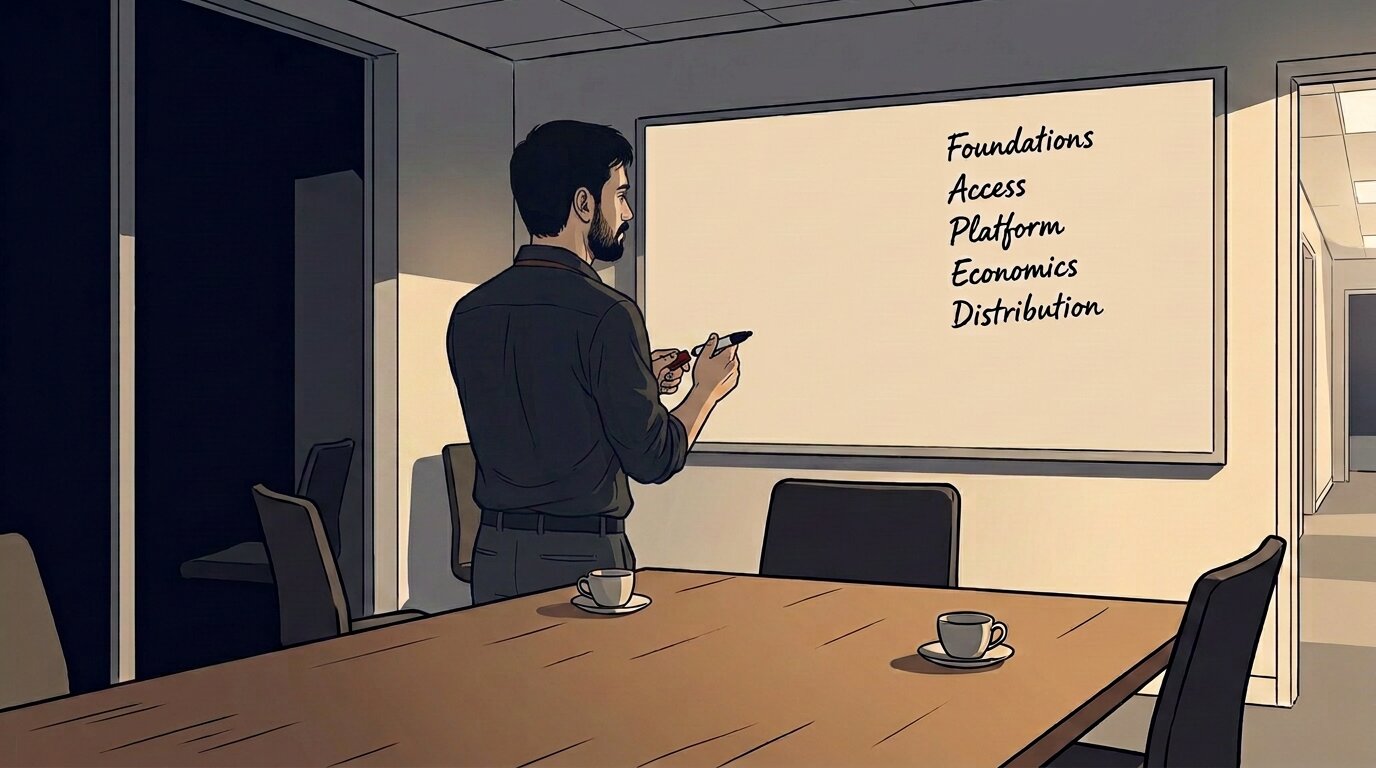
Richard Bale
Richard

Richard Bale

Chief Executive

Asks the questions everyone else has stopped asking, and is usually the last to be told. Spends the book learning that the thing he keeps being handed is never the thing that is actually wrong.

Asked for a slide on what was coming in three years, and wrote five words from memory instead.
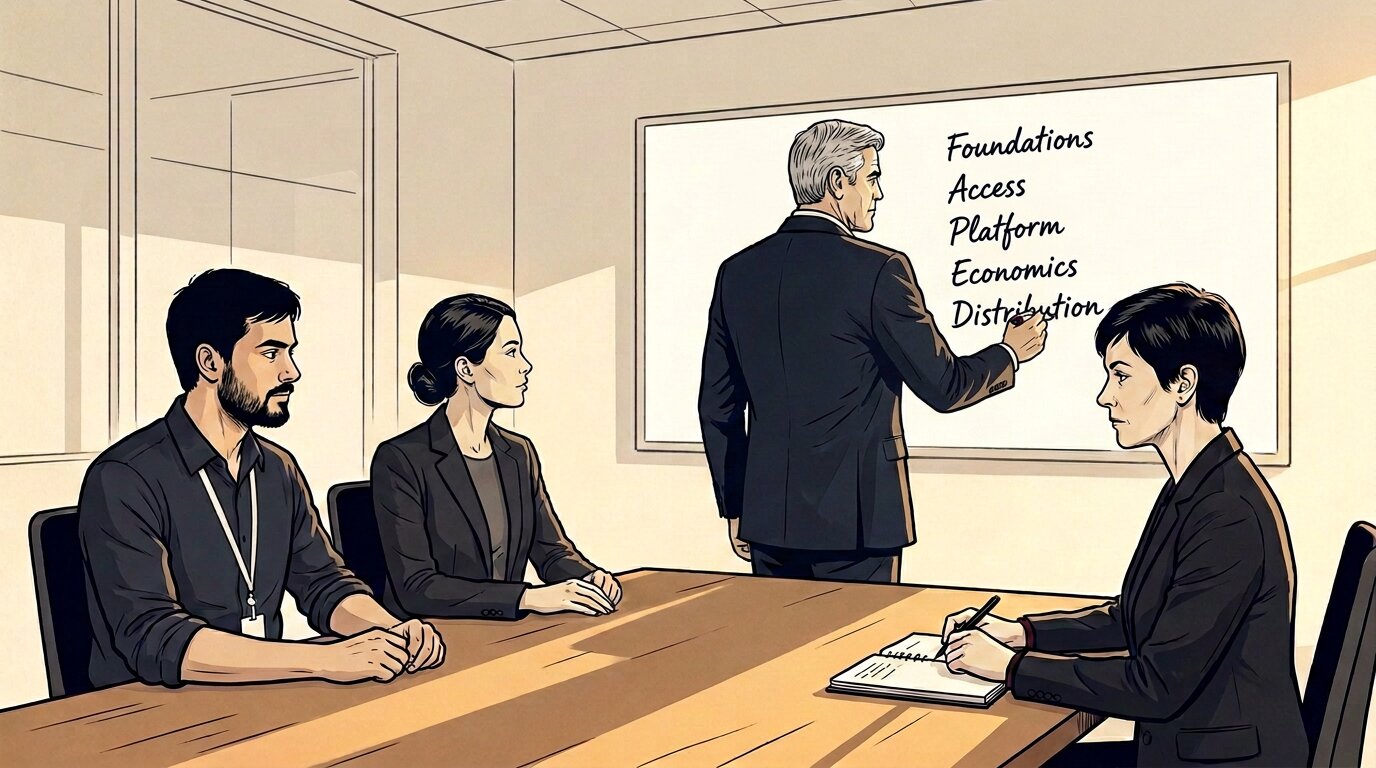
Richard writing five words on a whiteboard
Ch 11 · Panel 4

Chapter 11 — he writes the five words himself.

Maya Arora
Maya

Maya Arora

Chief Data Officer

Notices things early and says them late. Her silences carry more of the book than her lines do, and the question she asks without looking up is the one that turns out to matter.

Asks where the audit trail goes the way somebody asks about a fire exit.

Maya asking a question without looking up
Ch 8 · Panel 3

Chapter 8 — she does not look up.

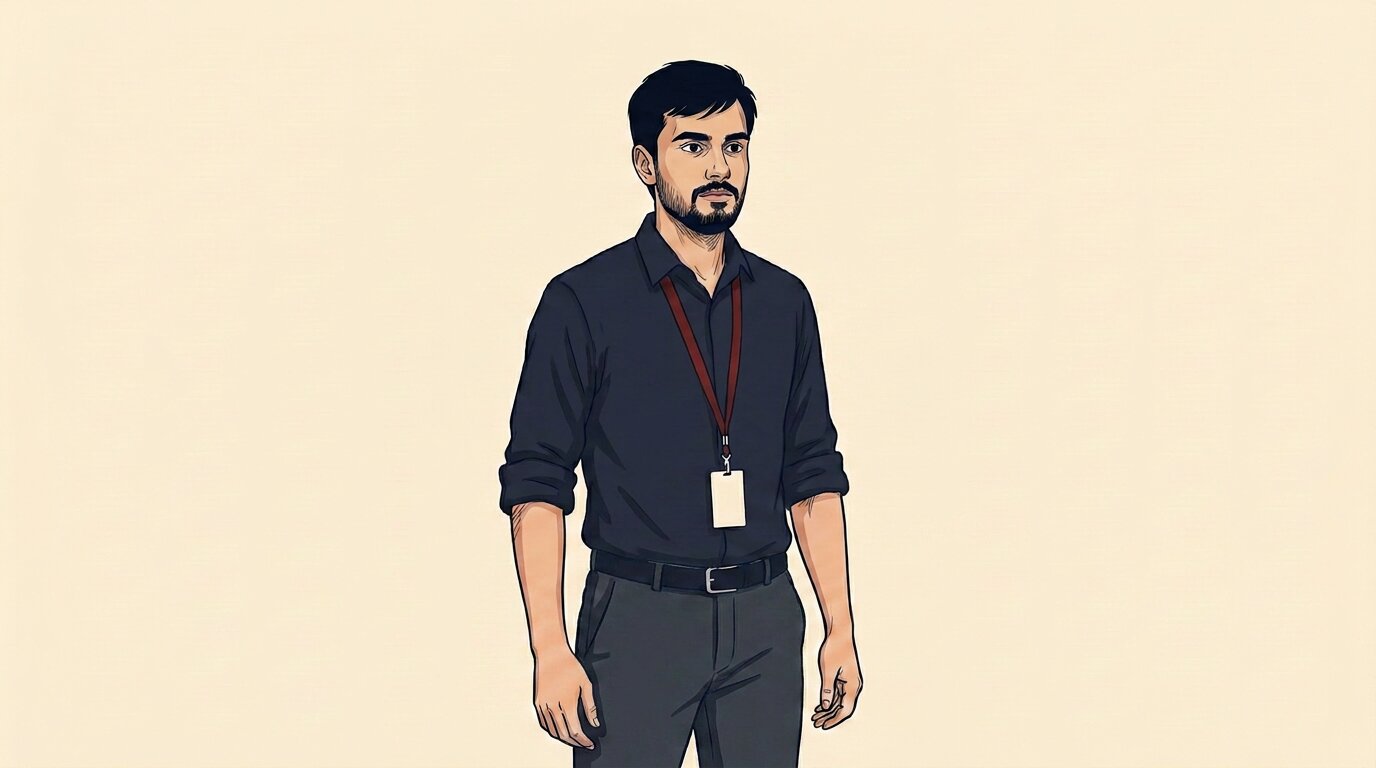
Kai Rajan
Kai

Kai Rajan

VP of AI

Builds the thing that works, and spends a decade finding out that was the easy part. He is wrong in public at least once, which the book needs him to be.

The closest thing in these pages to an authorial stand-in.

Kai capping the marker
Ch 12 · Panel 4

Chapter 12 — he caps the marker and adds nothing.

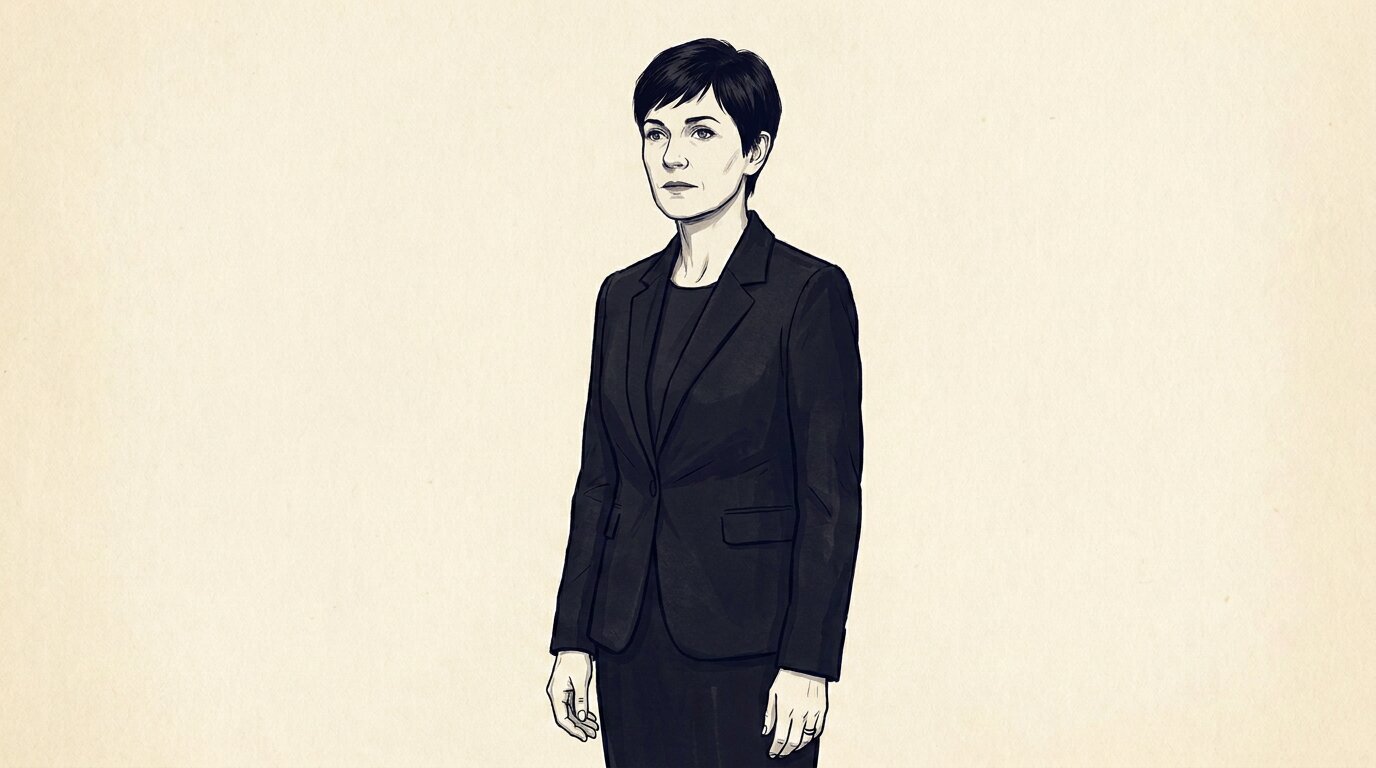
Nadia Voss
Nadia

Nadia Voss

External adviser

Has seen all five seams before, in other people's organisations, for a decade. She never diagnoses and never delivers the lesson. She asks, and the room answers itself.

Her notebook has been open since long before this story started.

Nadia closing her notebook
Ch 11 · Panel 5

Chapter 11 — she closes the notebook. Nothing left to write.

And two who are never named

Both appear by function rather than by name. That is deliberate — they arrive as the organisation rather than as colleagues, and naming them would make the moment personal when the point is that it isn't.

Chapters 6 and 9

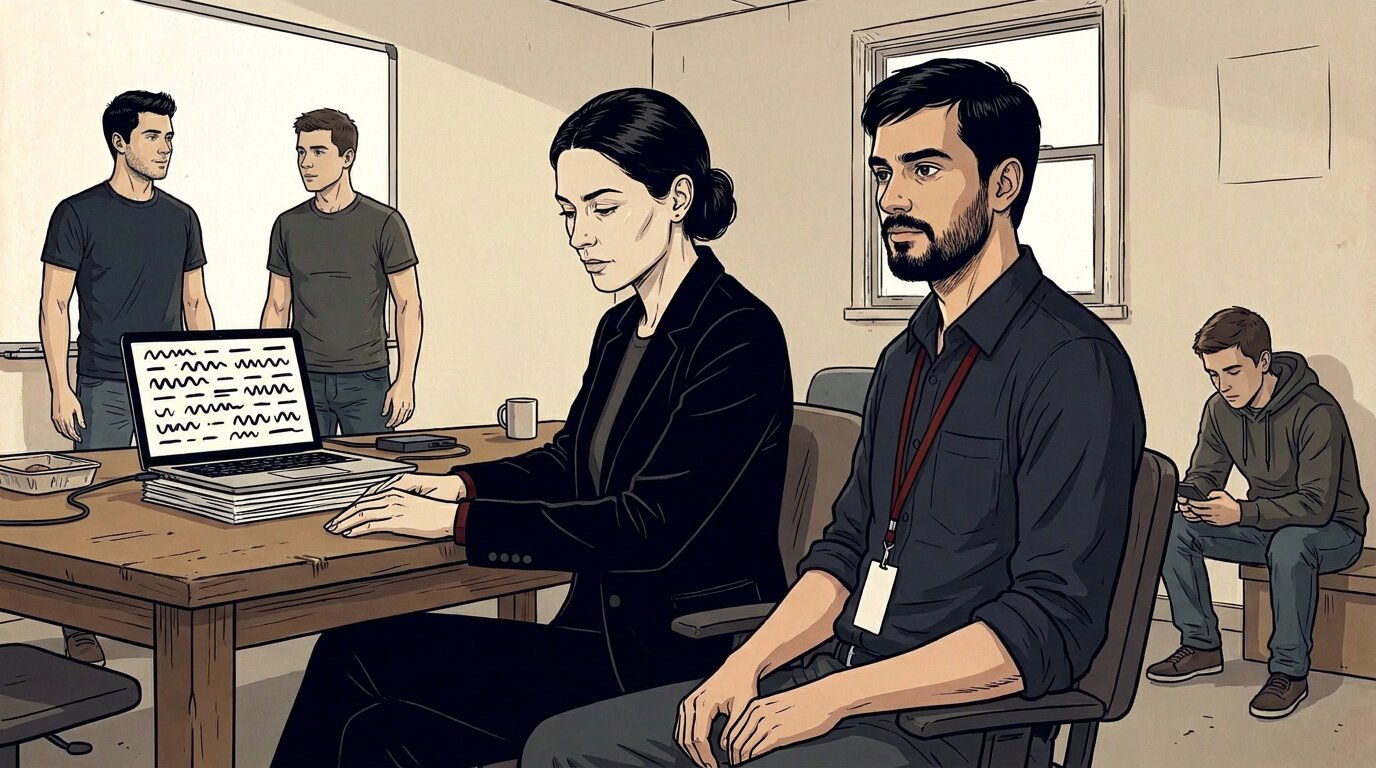
The Chief Financial Officer

Recognisable by a printed pack in a room full of laptops, and by the job of asking for proof. Corrects a man in Chapter 6 and funds him in Chapter 9 — same face, same pack, opposite outcome.

Chapter 7

The VP of Client Experience

Appears once, at the back of a room, to ask whether the thing everyone has been building was the thing she was supposed to be using.

The sequences run as one continuous story from the first chapter to the epilogue — seventy-one panels, and the last one has nobody in it.

Read a chapter